MIT D-Lab · Langa, South Africa · 2026
Bicycle-linked
emergency stretcher.
This is the project that taught me what happens when something works in the shop but doesn't work nearly as well on the road.
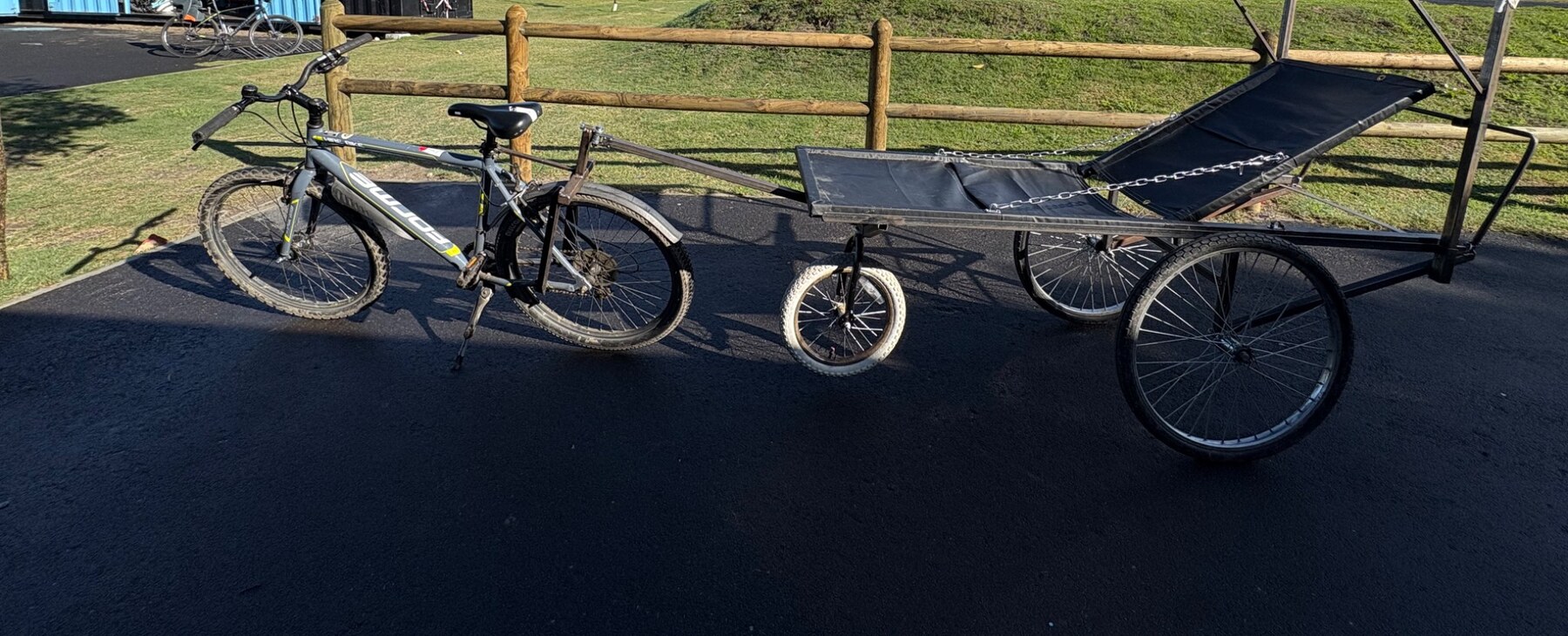
Getting someone to medical care shouldn't depend on whether an ambulance can reach their street.
In Langa, community members described long ambulance waits and the difficulty of moving patients through narrow or uneven roads. Our MIT D-Lab team worked with the Langa Bicycle Hub and local health workers on a stretcher that could be attached to a bicycle and used as part of a neighborhood emergency response system.
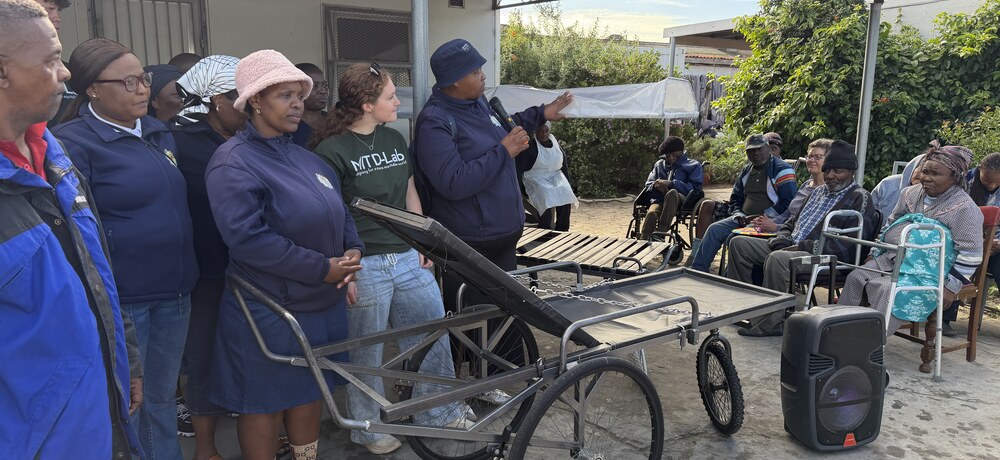
It was a lot more than a fabrication project. We talked with bicycle hub staff, nurses, residents with disabilities, and disability-center workers to understand how the stretcher could actually fit into the community.
The first connection wasn't good enough.
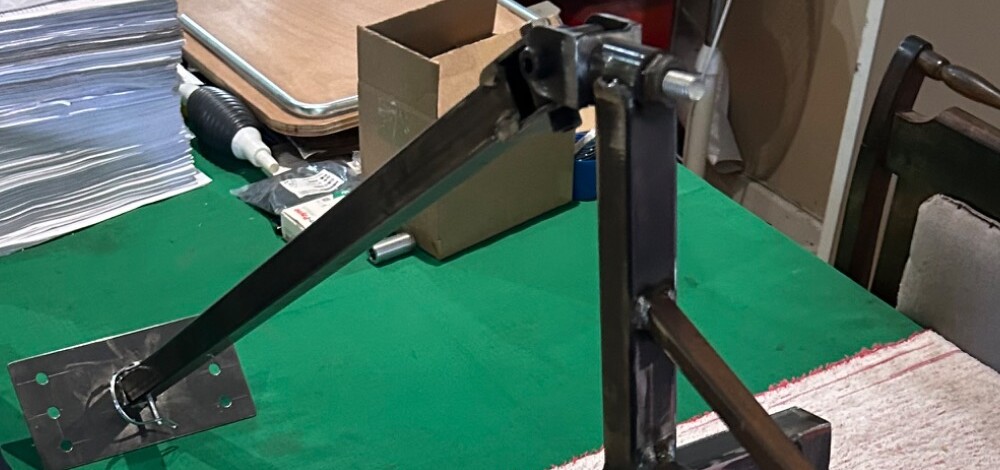
Our original setup had a sleeve-and-pin connection between the bike and stretcher, along with a makeshift ball-style joint compressed with washers. Riding straight was fine. Sharp turns, twisting, and the added weight of a passenger were another story.
We spoke with a local manufacturer who had used universal joints on bicycle trailers. I led the change to a universal-joint hitch, working through the geometry and the elevation of the stretcher to improve how the loads went through the connection. The revised joint gave the trailer the angular movement it needed when the bike turned or the ground was uneven.
Then we went riding.
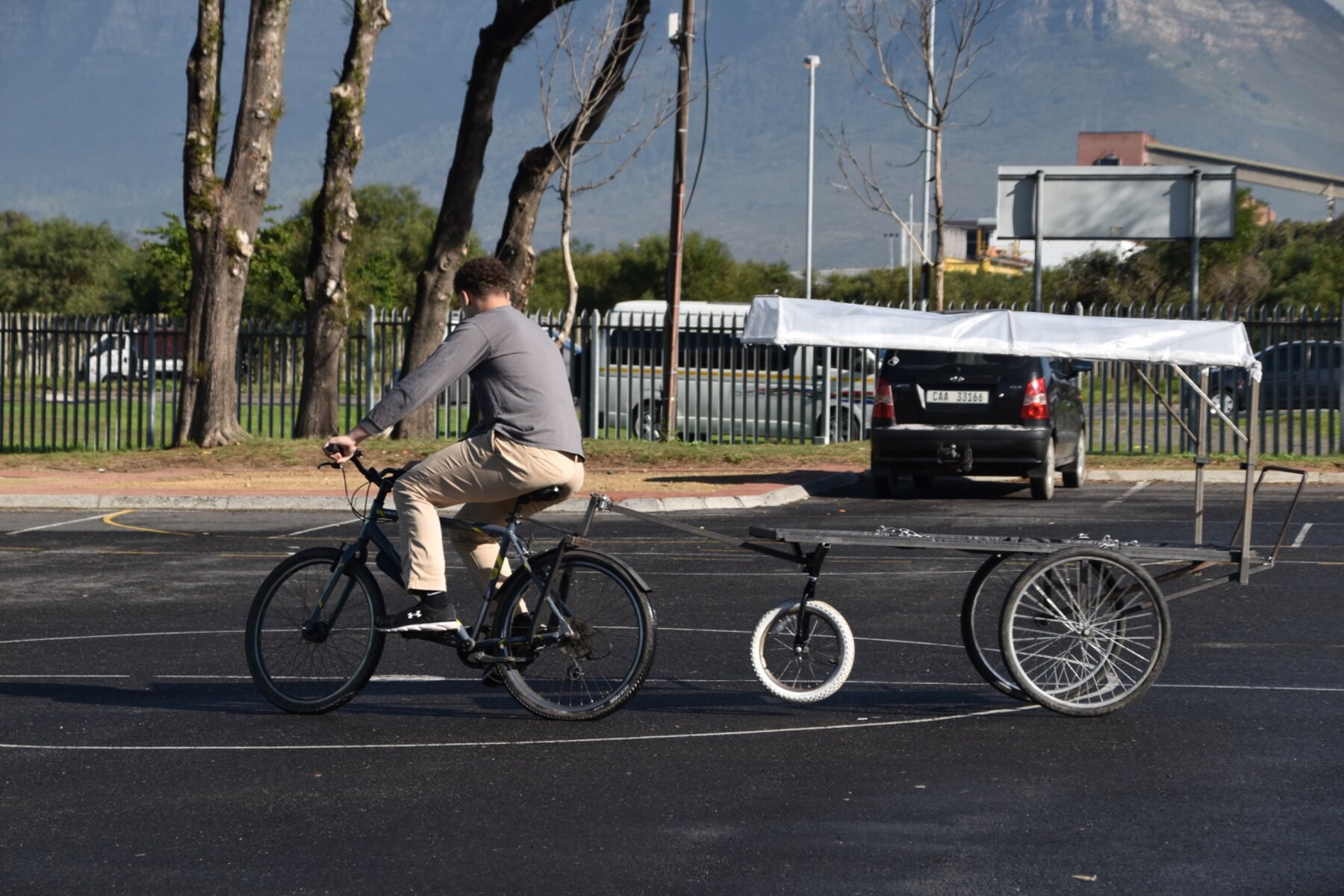
I led tests in an open lot and on nearby roads: tight turns, bumps, cracks, and changes in elevation. We tested it with me on the stretcher at about 250 pounds. The revised hitch handled those trials much better than our original connection.
That was an encouraging field result, but it wasn't a certified load rating. The next step is continued testing and refinement with the people who would operate the stretcher.
We also had to figure out who would use it, and when.
Our team worked on a plan for neighborhood pickup zones, nursing-station handoffs, and a call-based response using workers from the bicycle hub. The idea was for a healthcare worker to assess the situation while a bicycle hub worker brought the stretcher to the pickup point. Discussions with the hub about implementation are still ongoing.
What stuck with me was how often a mechanical change came directly from talking to someone who would have to use or maintain the design.
More background on the larger REACH initiative:
MIT D-Lab: Improving emergency transport in Langa ↗MIT D-Lab: Building reliable emergency access ↗