MIT D-Lab · Design, CAD, fabrication · 2026
16-briquette
charcoal press.
I wanted to build something that could make a lot of briquettes without needing a complicated, expensive mold for every single one.
*Reported press cycle, not including drying or proving sustained production throughput.
They needed a whole lot of charcoal briquettes.
Our South African partners described a need for large quantities of briquettes for cooking, along with concerns about prolonged smoke exposure from existing practices. Production speed and the ability to repair the press locally mattered just as much as whether the mechanism worked.
We learned that hydraulic bottle jacks were available locally, so we designed around one instead of relying on bodyweight to compress each briquette.
The original design had too many parts.
The earlier press used 16 individual loading and compression sections, with a hinged plate closing down from above. It was expensive to manufacture, and the hinge meant the briquettes nearest the pivot were compressed differently from the ones farther away.
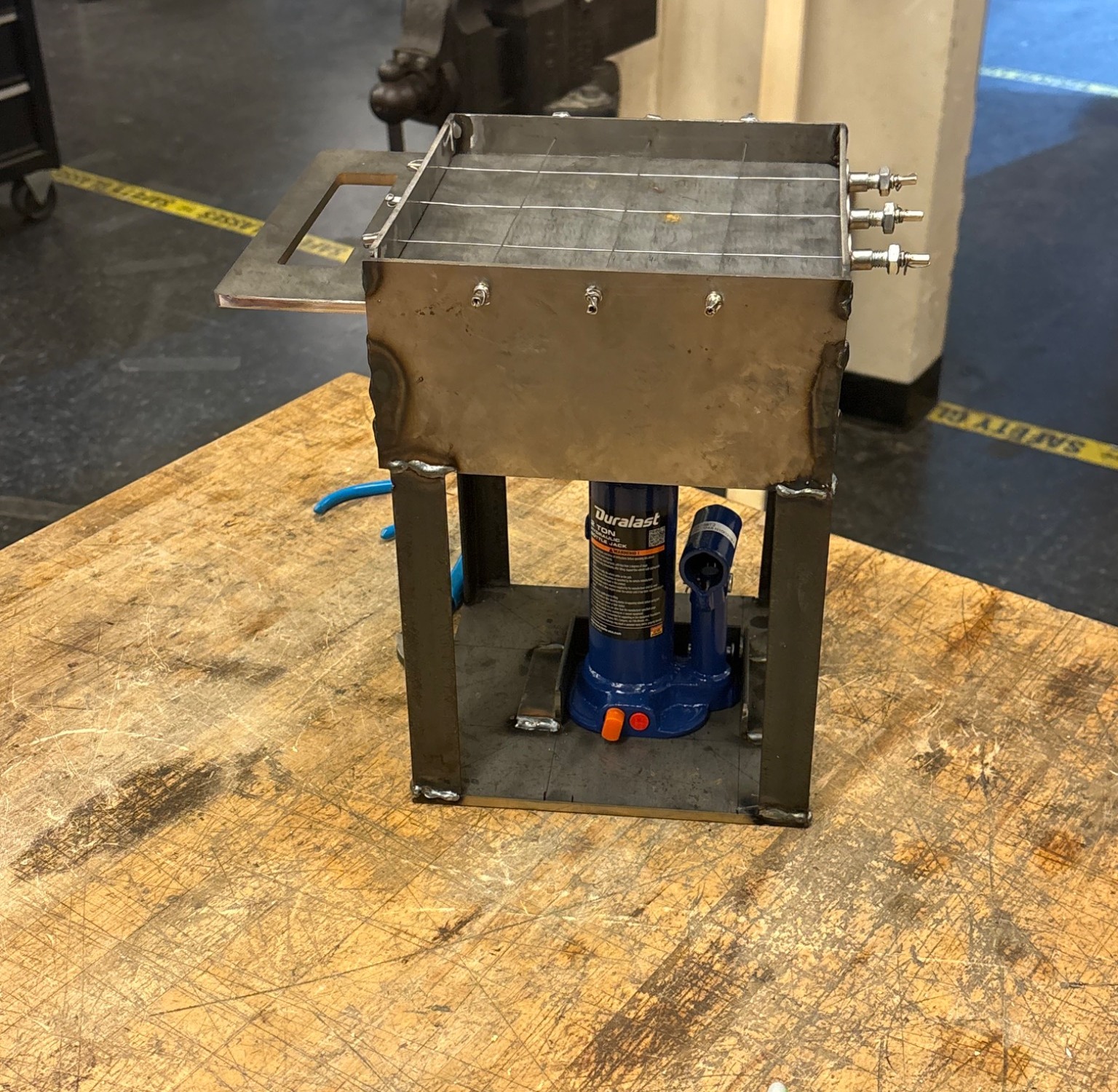
My redesign used one shared chamber and a bottom platen pushed upward by a bottle jack. I added a circular locator for the jack and fit the platen between guide rails so it could move upward without easily drifting sideways. This made the compression layout much simpler and helped keep the load centered.
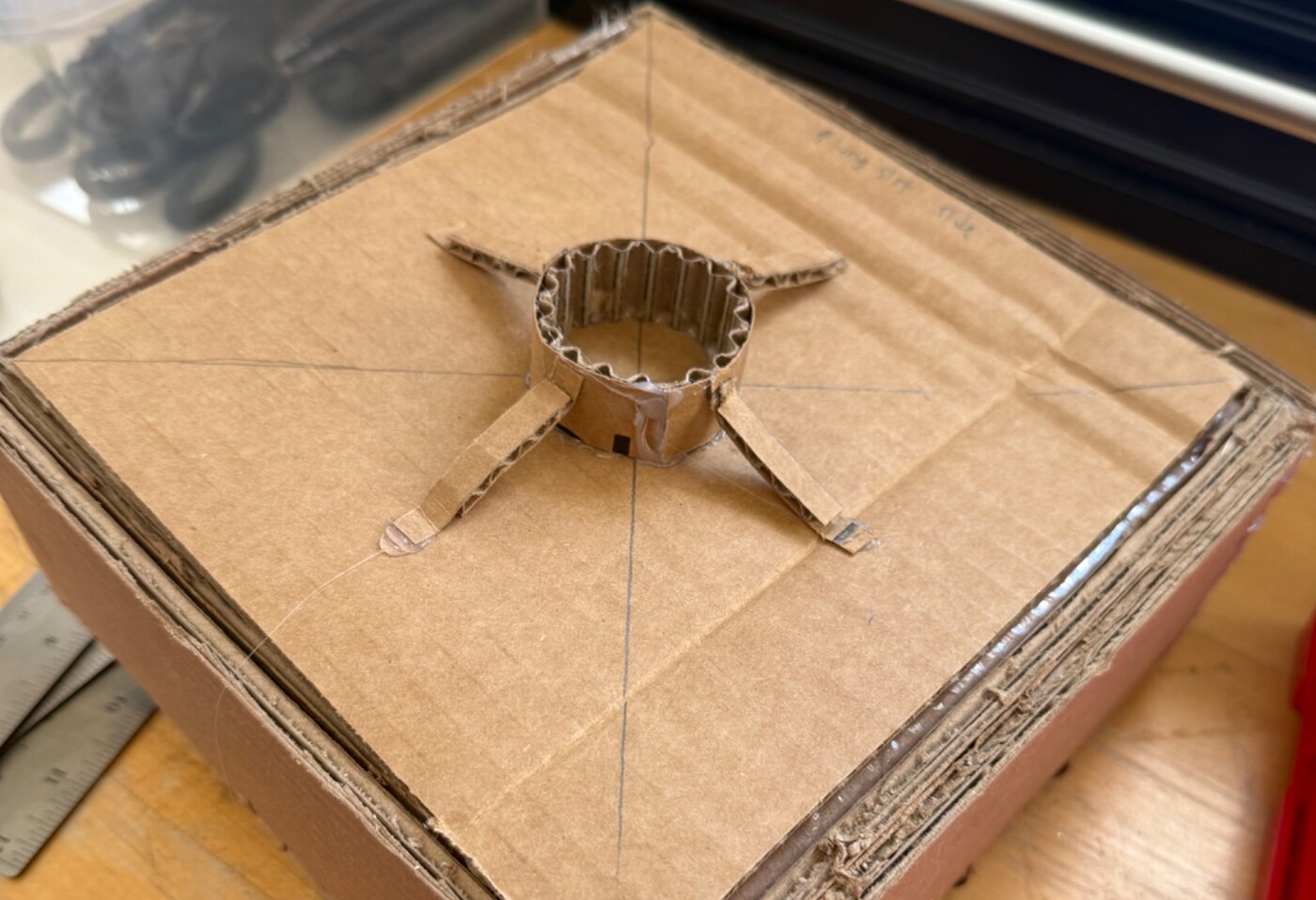
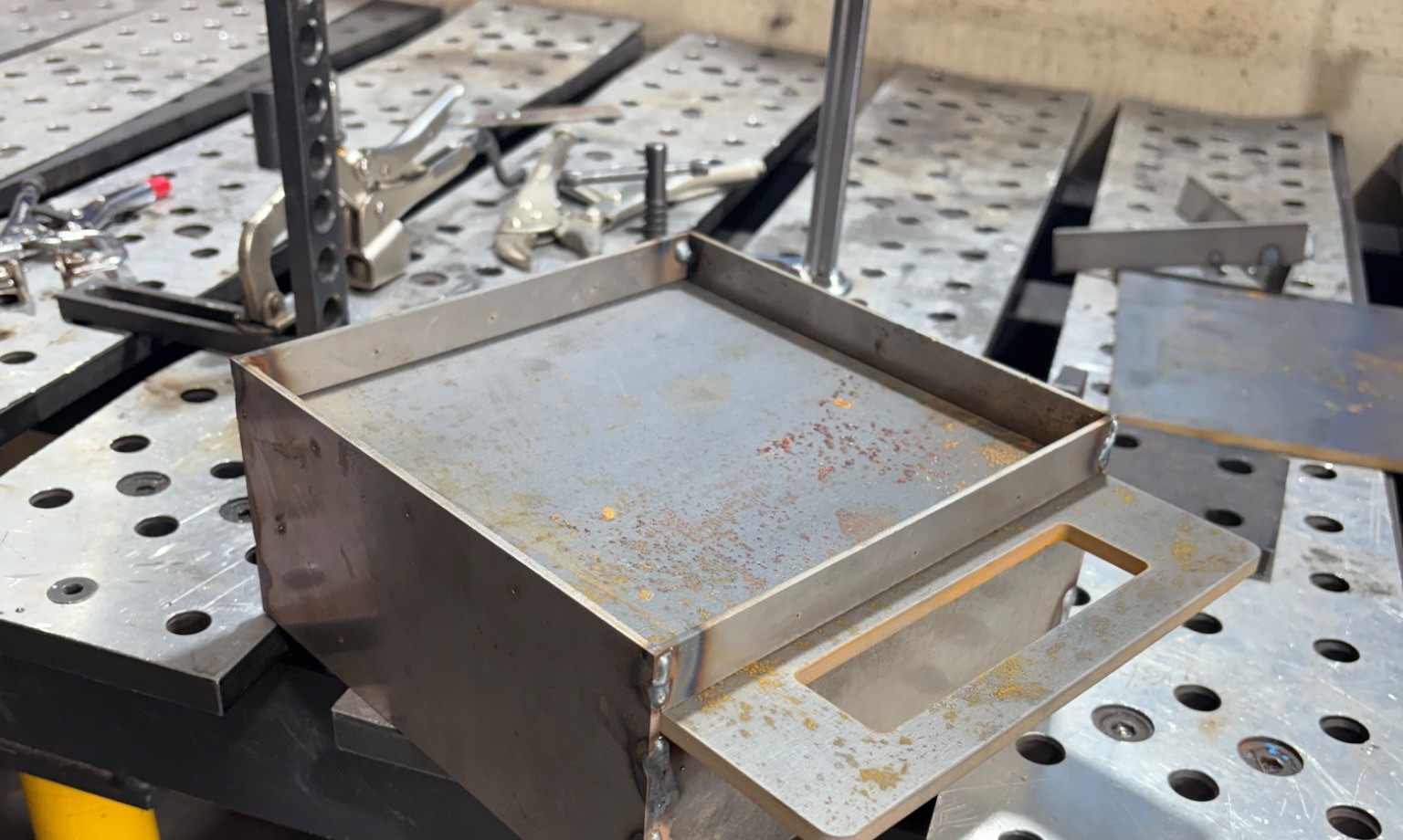
Making the block was easier than dividing it.
At first, we planned to compress one block of wet charcoal mixture and cut it into 16 pieces afterward. In practice, cutting the wet block without breaking it apart was a headache.
We tried different divider ideas, including a wire-grid prototype. The later design moved the scoring features onto the pressing plate itself. Raised metal ribs formed indentations during compression, giving the block lines along which the briquettes could be separated after drying.
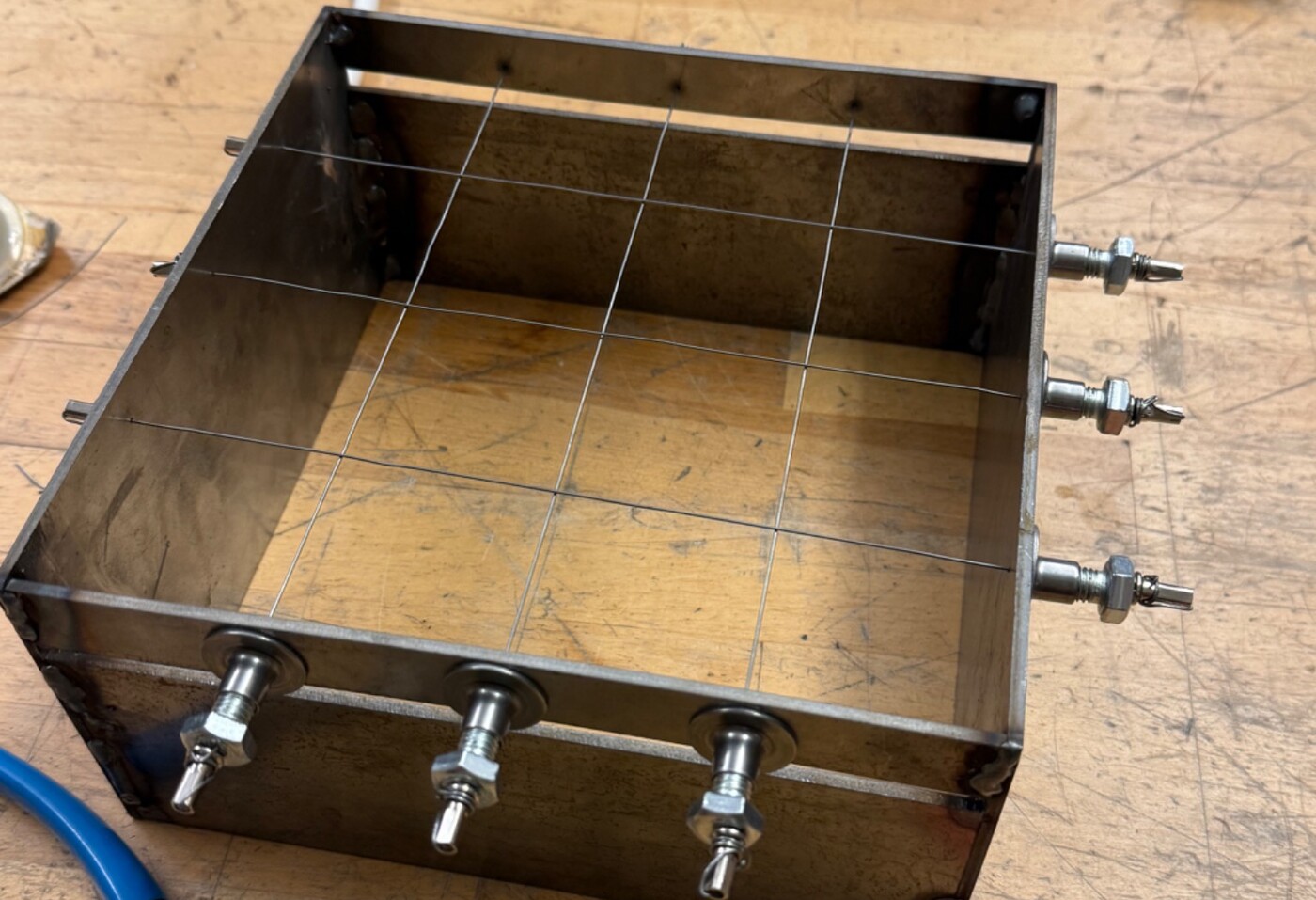
From my CAD model to welded steel.
I designed the press in CAD, prepared the files for waterjet cutting, and welded and assembled the frame. I made several iterations along the way, particularly around the sliding plates, the jack locator, and the scoring method.
The resulting prototype compressed enough material for 16 briquettes in a reported 47-second cycle. There is still work to do on reliable extraction, repeatability, and the strength of the briquettes after drying, but the project gave me the chance to take responsibility for the whole fabrication process and learn from the problems that came up.